
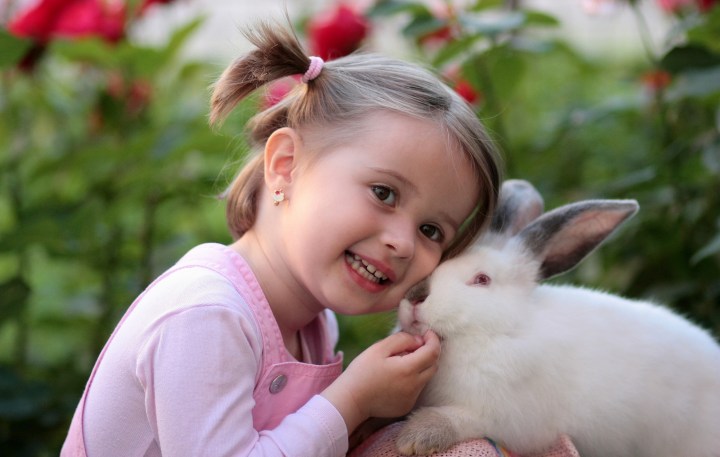
Formerly a gateway pet, the rabbit is now a family member popular among millennials and young urban couples or singles.
Cute, fluffy, with two long ears and a pompom tail : what’s not to love in a bunny ? This small mammal often replaces the dog or cat they can’t have because it’s considered too big, too expensive to keep, or because they can’t go for walkies several times a day. Actually, the rabbit is quite a nice mix between a cat and a dog : it’s not that big, it’s affectionate but independant and you can potty-train it. And like cats or dogs, rabbits come il all sizes, “shapes” and colours. From the tiny Polish dwarf weighing 1,5 kg to the 7,5 kg Flemish Giant, it’s virtually impossible to not find a bunny matching your taste.
All that is small
In Europe, pet parents tend to chose the smallest breeds, and love the cute look of the Mini Lop with its floppy ears. Following the recent trend of pet chickens, some suppliers are trying to launch a new line of true “garden rabbits”. Not like pet bunnies ending up in the garden when the kids are tired of it, but real mini rabbits bred to live outdoor. There are indeed some big or medium breeds that can do best in outdoor environments and respond better to a home that is similar to their habitat in the wild. Among them, we find for instance the Belgian Hare, the European, or even the Netherland Dwarf.
The perfect “rabbitat”
However, bunnies are better kept at home, in a safe environment free of predators and parasites, protected from the bad weather or extreme heat. But it doesn’t mean they should spend their whole life in a small cage. There are many bunny welfare organizations trying to raise awareness about rabbits biological and physiological needs. This little mammal can’t live in a confined habitat because of its specific morphology and muscles tailored to run and jump. It is better left roaming freely in the house or the appartment, with a safe place to sleep and a litter box, and that’s where the cage becomes handy. Luckily, some brands understands rabbits need of space and designed large cages, like for instance the Plaza 160 from Ferplast, with a length of 160 cm.
Playpens are better, though, and here as well there are some specially designed bunny palaces, like the spacious wooden enclosures from the brands Trixie or Lifland. This type of “rabbitat” is more and more popular for urban indoor rabbits, and offer them a perfect place to rest safely and have enough space to run, jump or stretch while their “parents” aren’t home. More and more pet stores are actually displaying their rabbits for sale in such enclosures. The fact the bunnies can move as they want and therefore look happy and healthy makes them much more desirable for the customers than animals overcrowded in a small terrarium, suffering of stress. Plus this type of large enclosure gives a lot of space to display other products for sale. A customer is more likely to purchase when they see how the animal interacts with the product than if it just sits on the shelf.
Veggies and natural treats
Another reason of the rabbit’s popularity is that it’s often considered easy to keep. Beginners or young children think they’ll just have to give water and throw a carrot once a while. Actually, keeping a rabbit is much trickier than that. And that’s because it’s an herbivorous. It means it has to eat hay constantly in order to have his digestive tract functioning and also to grind its teeth. As as a strict herbivorous, it shouldn’t be fed muesli or pellets full of grains. Only herbs, grasses, leaves, vegetables and a little bit of fruits. Luckily, brands offer now a wide variety of grain-free feed for rabbits, like Selective Natural, by Supreme Science or Grainless Mix by JR Farm, let’s not forget the legendary brand Oxbow with is Bunny Basic food. The same goes for treats. Bunnies now have their 100% natural treats, free of cheap fillers, bakery byproducts or cereals : Excel Mountain Meadow Hay (Burgess), Grainless Herbs (JR Farm), Simple Rewards (Oxbow), Friandise Gourmande (Hamiform)… Wich such healthy products, customers have more opportunities to bond with their bunny, and will often return to the store to purchase novelties.
Interactive companions
Rabbits make excellent companions. You can play with them, educate them, and train them to do various tricks. You can even train your rabbit to do agility, like dogs. This bunny sport is called kaninhop and comes from Sweden. It is a competition that involves bunnies bouncing their way around courses that consists of several small jumps of different heights. The first championship was held in Stockholm in 1987. The qualities needed to become the champion are of course agility, but also courage and determination. Pet parents – or more exactly bunny coaches – can train their rabbits by walking them on a harness and encourage them by talking to them and rewarding them with treats. For the training purpose, the brand Kerbl launched a line of agility obstacles specially designed for active bunnies : Agility Rocked, Agility Upright Jump and Agility Combo Jump. The jumps are made of two wooden stands and plastic bars, all adjustable in length and height. There are also now a lots of toys specially designed for rabbits, making them even more “interactive”, even if they are not meant to be agility champions, even if they are kept by children.
While most of the small mammals have a short lifespan, rabbits can live up to 12 years, if well taken care of. It means customers will often return to the store for years in order to buy supplies to pamper their fur kid. Brands and retailers have a fantastic opportunity to capitalize on these cottontails cuteness and long lifespan. Rabbits are the new cats !
By Marie-Sophie Germain
First published in PETS TODAY

 POCKET PETS GAZETTE