
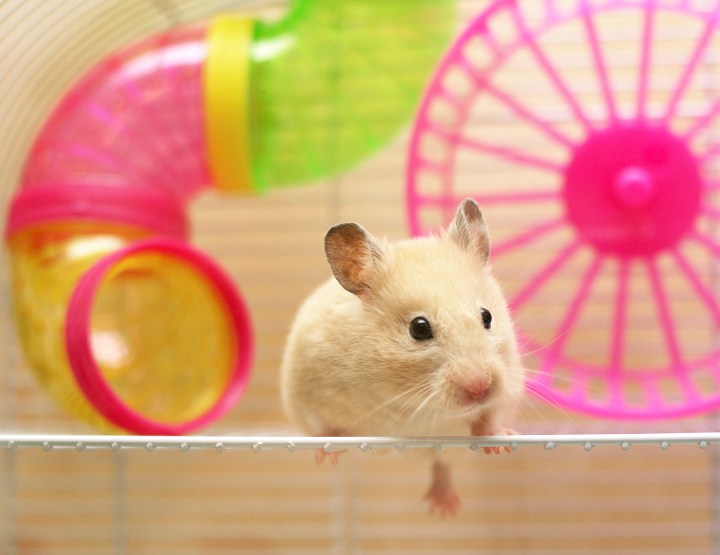
The rising popularity and appeal of small mammals has contributed to the growth of this market, with the current pet humanisation trend creating many opportunities for value-added products.
The rising popularity and appeal of small mammals particularly among couples with small children has contributed to the growth of this market. Not long ago, these little critters were gateway-pets for children. Nowadays, they are true family members, “fur kids” pampered by millenials. The current pet humanisation trend has created many opportunities for value-added products.
According to the FEDIAF, there are 28.758.000 small mammals in Europe (excluding Nordic countries and Baltic states). In Europe, the revenue of specialized food has increased of 15%, and 72% in specialised pet shops.
Most small animals live for only a couple of years. If these animals are not fed properly, they can die eaven earlier. Reason why many pet owners are concerned about the quality and the origin of the food they give their fur kids. Palm oil, cheap fillers, added sugar or toxic additives are prohibited. No more artifically coloured kibbles bought at the supermarket. Pet parents want now organic and natural foods that come the closest to what the animal would eat in the wild.
For small herbivorous mammals (rabbits, guinea pigs and chinchillas), even the hay, considered as basic staple-food, is very carefully chosen. Pet owners look now for different varieties of hay : meadow hay, mountain hay, timothy hay, with aromatic herbs, flowers, dandelion, mint, dried apples… American brands such as Oxbow were among the first to offer these premium variety of hay. Today, Hamiform for example offers no less than 7 different products. Still for herbivores, grain-free pellets are also very trendy. Indeed, rabbits and guinea pigs must feed only on grasses or leaves, all seeds or grains are prohibited. Brands offer now premium grain-free feed, like the Selective Natural line from Supreme Science.
For the small omnivores mammals (hamsters, rats, mice, gerbils …), here as well the pet industry tries to get closer to the natural way of life of these critters, which in the wild harvest many small different victuals : fruits, berries, insects, seeds, roots… Now they exist as a dried mixture, such as the Terra line from Vadigran or Versele-Laga’s Natureproducts.
For their carnivorous ferrets, pet parents choose raw organic meat based meals, rather than canned food or kibbles full of carbohydrates and vegetal proteins.
Same trend with the snacks, natural products are also in. Versele-Laga, for instance, offers a variety of berries, fruits or cereals, with its Nature Snack. The French brand Hamiform developed a whole line of 5 products made of a mix of 100% natural, dried herbs.
When it comes to rodents cages, the bigger, the better. Despite an increase in the small mammal population, cage sales are down. Pet parents are less and less willing to see a caged animal. Thus, many rabbits and guinea pigs live in pens, free ranging in the appartment, or housed in home-made habitats, much more spacious. The Ferplast brand understood this well, offering a wooden enclosure, XXL cages up to 160 cm long and two-storeys wooden hutches (Arena, Ranch Restyling, Cottage…).
For their small rodents such as hamsters or gerbils, their “parents” want now functunial and aesthetic products. For this reason, DIY habitats, or cages made from customised IKEA furniture became very trendy. That’s probably why the British brand Omlet created Qute, an elegant piece of contemporary furniture. It looks like a storage cabinet with two levels : the top level looks like a regular cage for feeding and exercising, whereas the bottom one is an extra deep tray – much like a plastic aquarium – for nesting and burrowing. Zolux also focused on the decorative aspect, with its Nevo cages, placed on a support with wooden feet reminiscent of Scandinavian furniture.
We have also seen the development of a hybrid habitat, combining a glass or plastic terrarium surmounted by a traditional cage. This concept is found for instance with the items Gabry, Duna, Gerbi and Favola (Ferplast), Neo Panas (Zolux), and Habitat Metro or Habitat XL (Savic).
As bedding for the cages, forget sawdust. The pet industry offers now several great alternatives for small mammals. The most popular bedding at the moment is hemp bedding. Corn is also hype. These produts are dust-free, making them suitable for small rodents that have very sensitive airways, like rats and mice.
Cellulose bedding – like the Carefresh line or Pure Confort from Oxbow – is also considered safe. It is very absorbent and very soft. It is also confortable and makes the best material to fill a nest. Unfortunately, cellulose bedding comes at a premium price, which means that “rodent parents” sometimes prefer to buy soft shredded recycled paper, which offers the same qualities. This bedding is perfect for smaller rodents such as hamsters and gerbils who like to burrow.
Lately, a number of brands like Demavic have launched mineral litter, made from diatomaceous earth powder (fossilised remains of diatoms, a type of micro-organism). It is very absorbent, acts as a mechanical and natural insecticide, and is biodegradable.
Nowadays, many guinea pig owners replace traditional bedding by the use of a combination of washable fleece blankets placed on top of absorbent towels. The goal is not neccesary to offer more confort, but to avoid usual beddings causing problems when it comes to waste management. Maybe the pet industry will catch up and offer soon similar ready-to-use solutions.
When it comes to accessories, the market is still struggling. Brands try to cope by surfing on the wave of all natural products, by adding wooden accessories in their catalog. For instance, Ferlpast designed many wooden products like beds or wheels, in addition to its plastic items. Hideouts and beds made of braided dried grassed, hay or coconut fiber are also trendy.
For hygiene and care products, the humanization trend led to increasingly sophisticated lines. Of course, they have to be 100% natural. With its range Veto Pure, Beaphar, for instance, offers pipettes or antiparasitic sprays based on natural extracts of plants. Another example with Francodex, who produces an insecticide from natural diatomeous earth.
Marie-Sophie Germain

 POCKET PETS GAZETTE